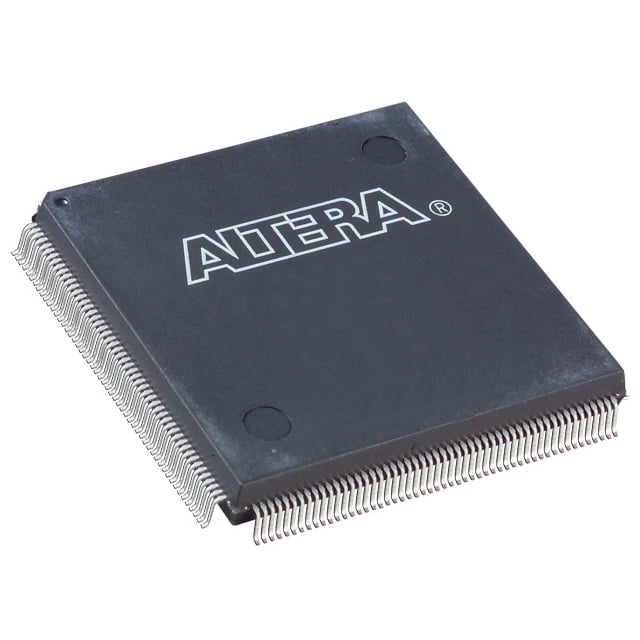
EP2C8AF256A7N

Active - IC FPGA 182 I/O 256FBGA
Description:
IC FPGA 182 I/O 256FBGA
EP2C8AF256A7N Specification
Product Attribute
Attribute Value
Programmable
Not Verified
Number of Logic Elements/Cells
8256
Voltage - Supply
1.15V ~ 1.25V
Mounting Type
Surface Mount
Operating Temperature
-40 ℃ ~ 125 ℃ (TJ)
Supplier Device Package
256-FBGA (17x17)
EP2C8AF256A7N Description
The Intel EP2C8AF256A7N is a member of the Cyclone II family of FPGAs (Field Programmable Gate Arrays) from Intel (formerly Altera). This FPGA is designed for a wide range of applications, including consumer electronics, automotive, industrial automation, and telecommunications. The Cyclone II series is known for its cost-effectiveness, low power consumption, and flexibility, making it an ideal choice for various embedded system designs.
### Overview
The EP2C8AF256A7N FPGA is built on a 90nm process technology, which allows for a compact design while providing sufficient performance for many applications. It features a combination of logic elements, memory blocks, and I/O capabilities that enable designers to implement complex digital circuits and systems efficiently.
### Key Specifications
1. Logic Elements:
- The EP2C8AF256A7N contains approximately 8,000 logic elements (LEs). Each logic element consists of a lookup table (LUT) and a flip-flop, allowing for the implementation of combinational and sequential logic functions.
- The architecture supports a variety of logic functions, enabling designers to create complex digital designs tailored to specific application requirements.
2. Memory:
- The FPGA includes embedded memory blocks, providing a total of 256 Kbits of on-chip memory. This memory can be used for data storage, buffering, and implementing algorithms, which is essential for applications that require fast access to data.
- The memory blocks can be configured as RAM or ROM, offering flexibility in how memory is utilized within the design.
3. I/O Capabilities:
- The EP2C8AF256A7N supports a wide range of I/O standards, including LVTTL, LVCMOS, and PCI. This flexibility allows the FPGA to interface with various external devices and systems.
- The device typically features up to 144 I/O pins, enabling extensive connectivity options for different applications.
4. Power Consumption:
- The Cyclone II family, including the EP2C8AF256A7N, is designed for low power consumption, making it suitable for battery-operated and energy-efficient applications. The typical power consumption is around 1.5 watts, depending on the configuration and workload.
- The FPGA also supports various power management features, allowing designers to optimize power usage based on application requirements.
5. Performance:
- The EP2C8AF256A7N operates at a maximum clock frequency of up to 200 MHz, providing sufficient performance for many digital signal processing and control applications.
- The device is capable of handling complex algorithms and high-speed data processing tasks, making it suitable for applications in telecommunications and industrial automation.
6. Development Tools:
- Intel provides a comprehensive suite of development tools for the Cyclone II family, including the Quartus Prime software. This software offers features for design entry, synthesis, simulation, and programming, facilitating the development process for engineers and designers.
- The development environment supports various design methodologies, including VHDL and Verilog, allowing for flexibility in design implementation.
7. Applications:
- The EP2C8AF256A7N is suitable for a wide range of applications, including:
- Consumer electronics (e.g., digital cameras, set-top boxes)
- Automotive applications (e.g., infotainment systems, advanced driver-assistance systems)
- Industrial automation and control systems
- Telecommunications equipment (e.g., routers, switches)
- Medical devices requiring reliable data processing and communication
8. Package and Form Factor:
- The EP2C8AF256A7N is available in a 256-pin BGA (Ball Grid Array) package, which provides a compact form factor suitable for space-constrained applications. The BGA package also facilitates efficient thermal management and signal integrity.
### Conclusion
The Intel EP2C8AF256A7N FPGA is a versatile and cost-effective solution for a wide range of embedded applications. With its combination of logic elements, embedded memory, and extensive I/O capabilities, it provides the flexibility needed to implement complex digital designs efficiently. The low power consumption and robust performance make it an ideal choice for applications in consumer electronics, automotive, industrial automation, and telecommunications. Additionally, the comprehensive development tools provided by Intel further enhance its appeal, enabling engineers to bring their designs to market quickly and effectively. Overall, the EP2C8AF256A7N is a reliable and powerful FPGA that meets the demands of modern embedded system design.


 Brazil