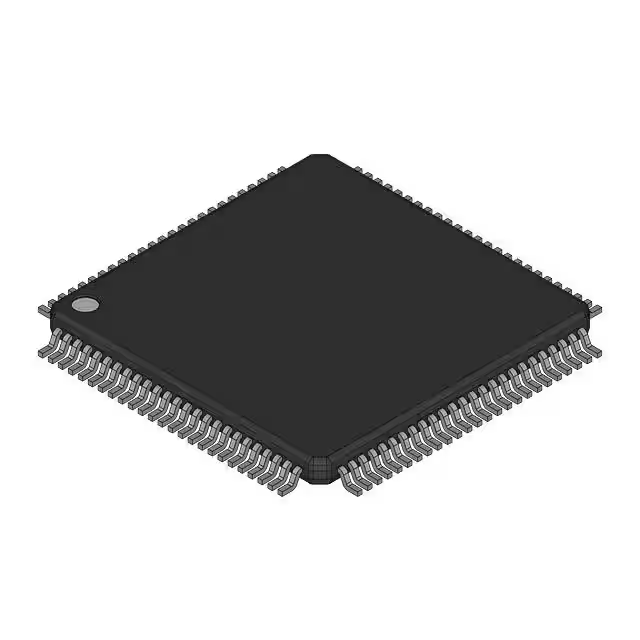
EPM240T100C4

Active - IC CPLD 192MC 4.7NS 100TQFP
Description:
IC CPLD 192MC 4.7NS 100TQFP
EPM240T100C4 Specification
Product Attribute
Attribute Value
Programmable
Not Verified
Programmable Type
In System Programmable
Delay Time tpd(1) Max
4.7 ns
Voltage Supply - Internal
2.5V, 3.3V
Number of Logic Elements/Blocks
240
Operating Temperature
0 ℃ ~ 85 ℃ (TJ)
Mounting Type
Surface Mount
Supplier Device Package
100-TQFP (14x14)
EPM240T100C4 Description
The Intel EPM240T100C4 is a member of the MAX 10 family of Field Programmable Gate Arrays (FPGAs) developed by Intel (formerly Altera). This FPGA is designed for a wide range of applications, including industrial, automotive, communications, and consumer electronics. The EPM240T100C4 offers a balance of performance, flexibility, and cost-effectiveness, making it suitable for various design requirements.
### Key Features:
1. Logic Elements: The EPM240T100C4 contains 24,000 logic elements (LEs), which can be configured to implement complex digital logic functions. Each logic element consists of a lookup table (LUT) and a flip-flop, allowing for efficient design of combinational and sequential logic.
2. Embedded Memory: The device includes embedded memory blocks, providing a total of 1,152 Kbits of on-chip memory. This memory can be used for data storage, buffering, and other applications requiring fast access to data.
3. I/O Pins: The EPM240T100C4 features 100 user I/O pins, which can be configured for various signaling standards, including LVTTL, LVCMOS, and others. This flexibility allows designers to interface with a wide range of peripherals and devices.
4. High-Speed Performance: The FPGA supports a maximum operating frequency of up to 200 MHz, enabling high-speed data processing and communication.
5. Power Management: The MAX 10 family, including the EPM240T100C4, is designed for low power consumption. The device operates at a core voltage of 1.2V, with I/O voltage options of 1.2V, 1.5V, 1.8V, 2.5V, and 3.3V, allowing for efficient power management in various applications.
6. Integrated Analog Features: The EPM240T100C4 includes integrated analog features such as analog-to-digital converters (ADCs) and digital-to-analog converters (DACs), which can be used for mixed-signal applications.
7. Configuration Options: The device supports multiple configuration methods, including JTAG, AS (Active Serial), and PS (Passive Serial), providing flexibility in how the FPGA is programmed and reconfigured.
8. Development Tools: Intel provides a comprehensive suite of development tools, including the Quartus Prime software, which facilitates design entry, simulation, and programming of the FPGA. The software supports various design methodologies, including HDL (VHDL and Verilog) and graphical design entry.
### Specifications:
- Part Number: EPM240T100C4
- Logic Elements: 24,000
- Embedded Memory: 1,152 Kbits
- User I/O Pins: 100
- Maximum Operating Frequency: Up to 200 MHz
- Core Voltage: 1.2V
- I/O Voltage Options: 1.2V, 1.5V, 1.8V, 2.5V, 3.3V
- Package Type: TQFP (Thin Quad Flat Package) with 100 pins
- Operating Temperature Range: Commercial (0°C to 85°C) and Industrial (-40°C to 100°C) options available
- Configuration Methods: JTAG, AS, PS
### Applications:
The Intel EPM240T100C4 FPGA is suitable for a variety of applications, including:
- Industrial Automation: Used in control systems, robotics, and process automation for real-time data processing and control.
- Automotive: Employed in automotive electronics for applications such as sensor processing, motor control, and infotainment systems.
- Communications: Utilized in networking equipment, including routers and switches, for data packet processing and signal routing.
- Consumer Electronics: Found in devices such as smart TVs, gaming consoles, and home automation systems, where flexibility and performance are essential.
### Conclusion:
The Intel EPM240T100C4 FPGA is a versatile and powerful device that meets the needs of modern digital design. With its ample logic resources, embedded memory, and flexible I/O options, it is well-suited for a wide range of applications across various industries. The combination of high performance, low power consumption, and robust development tools makes it an attractive choice for engineers and designers looking to implement custom digital logic solutions.


 Spain