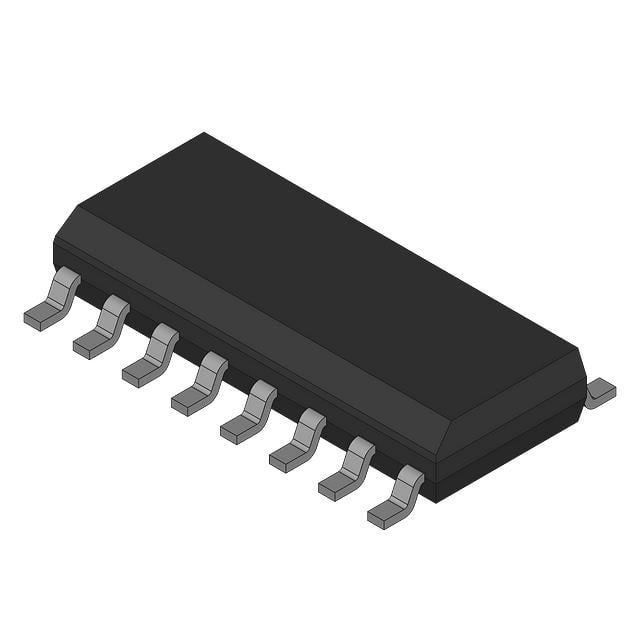
MAX13050ASA

Obsolete - IC TRANSCEIVER FULL 1/1 8SOIC
Description:
IC TRANSCEIVER FULL 1/1 8SOIC
MAX13050ASA Specification
Product Attribute
Attribute Value
Number of Drivers/Receivers
1/1
Receiver Hysteresis
70 mV
Voltage - Supply
4.75V ~ 5.25V
Operating Temperature
-40 ℃ ~ 125 ℃
Mounting Type
Surface Mount
Package / Case
8-SOIC (0.154", 3.90mm Width)
Supplier Device Package
8-SOIC
MAX13050ASA Description
The Maxim Integrated MAX13050ASA is a high-performance, single-channel, 12-bit analog-to-digital converter (ADC) designed for precision measurement and data acquisition systems. It integrates a low-noise, successive-approximation register (SAR) architecture with a high-speed sample-and-hold stage to provide accurate digitization of analog signals over a wide input range. The device is optimized for applications requiring low power consumption, high throughput, and minimal distortion, making it suitable for industrial sensing, precision instrumentation, and embedded control systems. The MAX13050ASA operates from a single supply voltage and is packaged to support compact, high-density system designs. Its internal architecture combines fast conversion times with high linearity and low differential nonlinearity, ensuring reliable analog-to-digital conversion for critical measurement applications.
## Device Function and Positioning
The MAX13050ASA functions as a monolithic, high-accuracy ADC with integrated sample-and-hold circuitry and a 12-bit resolution. It is positioned in Maxim Integrated's portfolio as a precision, low-power ADC solution, providing a balance between speed, accuracy, and system integration. The device is designed to replace discrete ADC components in systems that require precise analog signal digitization, simplifying the signal chain by combining the sample-and-hold and SAR conversion stages in a single integrated circuit. Its architecture ensures low input-referred noise, high linearity, and stable performance across temperature and supply voltage variations, which is critical for industrial and instrumentation applications.
## Electrical Characteristics and Key Parameters
The MAX13050ASA supports a 12-bit resolution, allowing it to represent analog input signals with 4096 discrete levels. Its typical signal-to-noise and distortion (SINAD) performance exceeds 70 dB, and total harmonic distortion (THD) remains low across the input frequency range. The device operates from a single supply voltage, typically 2.7 V to 5.5 V, enabling integration into low-voltage systems while maintaining high-speed performance. Conversion rate is specified up to 1 MSPS, with the acquisition time tuned to match the SAR conversion cycle for optimal throughput. The input voltage range is differential, supporting a maximum span of 0 V to VREF, with an internal reference option to simplify system design. Input impedance is high to minimize loading effects on the signal source, and the device maintains low offset voltage and low input bias current for precise measurement.
The MAX13050ASA exhibits low power consumption, with typical active current in the microampere range during sampling and conversion. Standby or power-down modes further reduce energy usage, which is advantageous for battery-powered or energy-constrained applications. Its differential nonlinearity (DNL) and integral nonlinearity (INL) are tightly controlled, typically within ±0.5 LSB and ±1 LSB respectively, ensuring monotonicity and predictable system behavior. The device also includes features to minimize glitch energy during code transitions, preserving signal fidelity during rapid sampling.
## Input and Output Interfaces
The device provides a single-ended or differential analog input, compatible with standard industrial sensor outputs. The sample-and-hold amplifier buffers the input to the SAR ADC, isolating it from conversion switching artifacts. Digital output is presented in a standard serial interface, typically SPI-compatible, allowing easy integration with microcontrollers, FPGAs, and DSP systems. The serial interface supports clocking rates up to tens of megahertz, ensuring high-speed data transfer without compromising accuracy. Control signals include conversion start, data ready, and power-down modes, enabling precise timing coordination in multi-channel or synchronized acquisition systems.
## Timing and Conversion Characteristics
Conversion timing is defined by the SAR architecture, with typical conversion time of 1 µs at the maximum sampling rate. Acquisition time is matched to input capacitance, allowing the internal sample-and-hold to charge fully before conversion, minimizing acquisition errors. The device exhibits low aperture uncertainty, contributing to minimal jitter in high-frequency sampling applications. Timing parameters are specified over the full operating temperature range to ensure stable performance in industrial and environmental sensing applications.
## Package and Thermal Considerations
The MAX13050ASA is supplied in a compact surface-mount package suitable for high-density PCB layouts. Its thermal characteristics allow operation over the standard industrial temperature range, with junction-to-ambient thermal resistance designed to prevent self-heating effects from impacting accuracy. Low power dissipation, combined with careful thermal management, ensures reliable performance in embedded or precision instrumentation systems.
## Typical Applications
This ADC is suitable for high-performance sensing, data acquisition, and control systems. Applications include industrial process monitoring, precision instrumentation, medical measurement devices, sensor interface modules, and embedded control systems requiring accurate analog-to-digital conversion. Its high linearity, low noise, and fast conversion time make it ideal for systems requiring real-time measurements, multi-channel data collection, or high-speed control loops.
## Conclusion
The Maxim Integrated MAX13050ASA is a precision 12-bit SAR ADC combining low noise, fast conversion, and integrated sample-and-hold functionality. Its electrical characteristics, including low INL/DNL, high SINAD, and low power consumption, make it suitable for industrial, instrumentation, and embedded applications demanding accurate and reliable analog-to-digital conversion. With flexible input configurations, SPI-compatible output, and compact packaging, the MAX13050ASA provides a robust solution for designers seeking high-accuracy, high-speed ADC performance in space- and power-constrained systems.


 Brazil