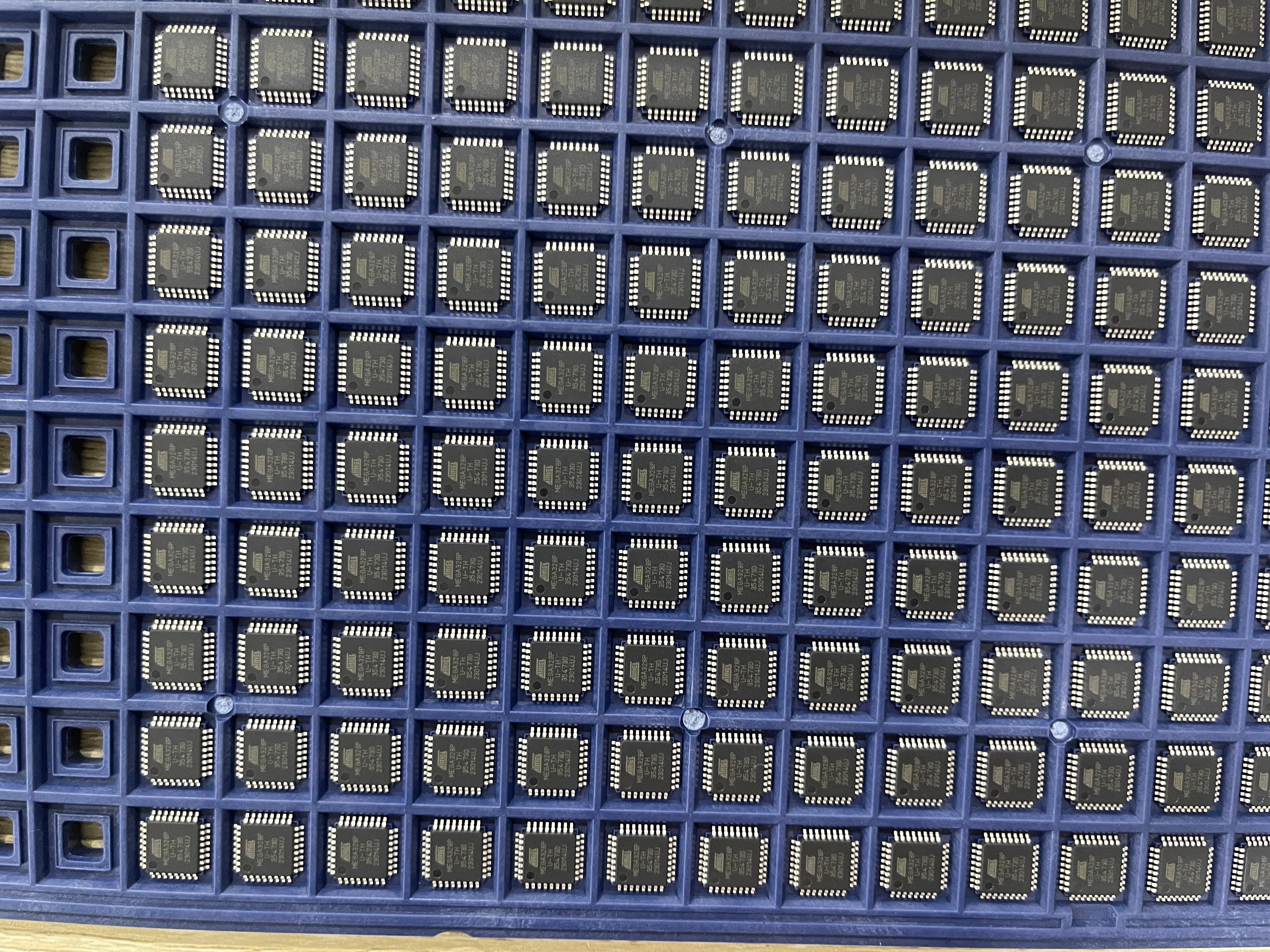
ATMEGA328P-AU

Active - IC MCU 8BIT 32KB FLASH 32TQFP
Description:
IC MCU 8BIT 32KB FLASH 32TQFP
ATMEGA328P-AU Specification
Product Attribute
Attribute Value
Connectivity
I2C, SPI, UART/USART
Peripherals
Brown-out Detect/Reset, POR, PWM, WDT
Program Memory Size
32KB (16K x 16)
Program Memory Type
FLASH
Voltage - Supply (Vcc/Vdd)
1.8V ~ 5.5V
Data Converters
A/D 8x10b
Operating Temperature
-40 ℃ ~ 85 ℃ (TA)
Mounting Type
Surface Mount
Supplier Device Package
32-TQFP (7x7)
ATMEGA328P-AU Description
The Microchip Technology ATMEGA328P-AU is an 8-bit microcontroller based on the AVR architecture, designed for embedded systems and microcontroller-based applications. It offers a range of features suitable for a wide variety of applications, from consumer electronics and automotive systems to industrial automation and IoT (Internet of Things) devices. The ATMEGA328P-AU is popular for its balance of performance, power efficiency, and ease of integration, making it one of the most commonly used microcontrollers in the ATMEGA series.
This microcontroller is based on the AVR RISC architecture, which allows it to execute instructions in a single clock cycle, offering high performance in low-power environments. It is particularly popular in Arduino-based projects, where it serves as the core processing unit for many DIY and hobbyist electronics projects.
### Key Features and Architecture
* Architecture: AVR 8-bit RISC (Reduced Instruction Set Computing)
* Operating Voltage: 1.8V to 5.5V
* Flash Memory: 32 KB (with 0.5 KB used for bootloader)
* SRAM: 2 KB
* EEPROM: 1 KB
* Clock Speed: 20 MHz (maximum)
* I/O Pins: 23 I/O pins (including 6 analog inputs)
* Timers: 3 Timer/Counters (8-bit and 16-bit)
* PWM: 6 PWM (Pulse Width Modulation) channels
* Watchdog Timer: Yes, with internal oscillator
* USART: Universal Synchronous and Asynchronous Serial Receiver and Transmitter
* SPI: Serial Peripheral Interface
* I2C: Inter-Integrated Circuit (TWI)
* ADC: 10-bit Analog to Digital Converter (ADC)
* External Interrupts: Yes, 2 external interrupts
* Low Power Modes: Multiple sleep modes (Idle, Power-down, Standby)
* Package: 32-Pin QFN (Quad Flat No-lead) package (ATMEGA328P-AU version)
### Memory and Storage
* Flash Memory: The ATMEGA328P-AU has 32 KB of in-system programmable flash memory. This non-volatile memory allows for the storage of programs and data that persist even when the power is off. It features 0.5 KB of this memory reserved for the bootloader, enabling easier programming and firmware updates.
* SRAM: The microcontroller has 2 KB of static RAM (SRAM), providing temporary storage for data that the microcontroller uses during runtime, such as variables, stack, and heap.
* EEPROM: The device also includes 1 KB of electrically erasable programmable read-only memory (EEPROM), which is used for storing small amounts of data that need to be preserved even when the power is turned off, such as device configuration settings or sensor calibration data.
### Performance and Clocking
* Clock Speed: The ATMEGA328P-AU runs at a maximum clock speed of 20 MHz. This clock speed is sufficient for a wide range of applications, providing good performance for low-power embedded systems.
* Clock Source: The microcontroller typically uses an external crystal oscillator or resonator to generate the clock signal, but it can also use an internal 8 MHz RC oscillator, which is useful in applications requiring lower power consumption.
* Watchdog Timer: It includes an internal watchdog timer that can reset the microcontroller in case of software errors or malfunction, ensuring the system remains operational even if something goes wrong during the execution of the program.
### I/O and Peripherals
The ATMEGA328P-AU microcontroller is equipped with a range of I/O pins and peripheral features that provide flexibility for a variety of applications:
* General Purpose I/O Pins: It has 23 I/O pins, which can be used as either input or output, depending on the application. These I/O pins support digital logic levels and can be configured to handle different functions.
* Analog Inputs: The device includes 6 analog input pins that can be used to read signals from analog sensors or other sources. These inputs are connected to the 10-bit ADC (Analog to Digital Converter) that converts analog voltages into a digital format for processing by the microcontroller.
* PWM (Pulse Width Modulation): The ATMEGA328P-AU offers 6 PWM channels that allow for fine control over the duty cycle of a signal. This is useful for controlling the brightness of LEDs, motor speed, and other applications requiring analog-like output.
* Timers and Counters: It has three timers/counters, which are used for generating precise time delays, frequency generation, or pulse-width modulation. The timers include both 8-bit and 16-bit options.
* USART (Universal Synchronous and Asynchronous Receiver-Transmitter): This allows for serial communication between the microcontroller and other devices, such as sensors, displays, or other microcontrollers.
* SPI (Serial Peripheral Interface): The SPI interface provides high-speed data transfer with peripherals like EEPROMs, sensors, and displays.
* I2C (Inter-Integrated Circuit, TWI): The microcontroller also supports I2C communication, enabling it to interface with a variety of sensors and peripherals that use this protocol.
### Low Power Consumption
The ATMEGA328P-AU is designed with low-power operation in mind. It has multiple sleep modes that can be used to minimize power consumption when the microcontroller is not actively performing tasks. These modes include:
* Idle Mode: The CPU is halted, but the system clock and peripheral devices continue to run.
* Power-down Mode: The system clock is stopped, and most of the microcontroller's functions are disabled to reduce power consumption. Only the Watchdog Timer, External Interrupts, and the ADC remain active.
* Standby Mode: In this mode, the microcontroller’s internal clock is still active, but most of the other functions are disabled.
These low-power modes make the ATMEGA328P-AU ideal for battery-powered applications where energy efficiency is crucial.
### Communication Interfaces
* SPI (Serial Peripheral Interface): The microcontroller features the SPI interface, which allows it to communicate with a variety of external devices such as memory chips, display controllers, and sensors.
* I2C (TWI): The ATMEGA328P-AU also supports the I2C communication protocol, which allows it to communicate with multiple devices using only two signal lines, making it suitable for connecting sensors, EEPROMs, and other peripherals in systems with limited pin availability.
### ADC and Analog Features
* 10-bit ADC: The microcontroller includes a 10-bit ADC that provides high-resolution analog-to-digital conversion, allowing it to sample and process analog signals accurately. This is especially useful for applications that require reading signals from sensors, such as temperature sensors, light sensors, or pressure sensors.
* Voltage Reference: It also supports an internal 1.1V reference voltage for accurate ADC readings in low-voltage applications.
### Application Examples
The ATMEGA328P-AU is widely used in many embedded systems and DIY electronics projects. It is particularly popular in the Arduino platform, where it serves as the central processing unit for Arduino Uno boards. Common applications of the ATMEGA328P-AU include:
* Consumer Electronics: Used in devices like remote controls, toys, and home automation systems.
* Automotive Systems: For managing sensors, communication interfaces, and control systems in vehicles.
* Industrial Applications: In systems such as data acquisition, sensors, and control systems.
* IoT Devices: In smart devices, wearables, and connected sensors for collecting and processing data.
* Robotics: Used in small robots and automation projects that require a compact and low-power microcontroller.
### Electrical Specifications
| Feature | ATMEGA328P-AU |
| --------------------- | --------------------------------------- |
| Architecture | AVR 8-bit RISC |
| Flash Memory | 32 KB (0.5 KB bootloader) |
| SRAM | 2 KB |
| EEPROM | 1 KB |
| Clock Speed | Up to 20 MHz |
| I/O Pins | 23 I/O pins (including 6 analog inputs) |
| PWM Channels | 6 PWM channels |
| ADC | 10-bit, 6 channels |
| USART | 1 |
| SPI | Yes |
| I2C | Yes |
| Timers | 3 timers (8-bit and 16-bit) |
| Watchdog Timer | Yes |
| Operating Voltage | 1.8V to 5.5V |
| Package | 32-Pin QFN |
### Summary
The Microchip ATMEGA328P-AU is an 8-bit AVR microcontroller that provides a well-balanced combination of performance, power efficiency, and flexibility. With its 32 KB flash memory, 2 KB SRAM, and multiple I/O interfaces (such as SPI, I2C, USART), the ATMEGA328P-AU is a popular choice for a wide range of embedded systems and microcontroller-based applications. Its low-power modes, high-speed clocking, and 10-bit ADC make it particularly suitable for battery-powered, real-time systems.



 Brazil