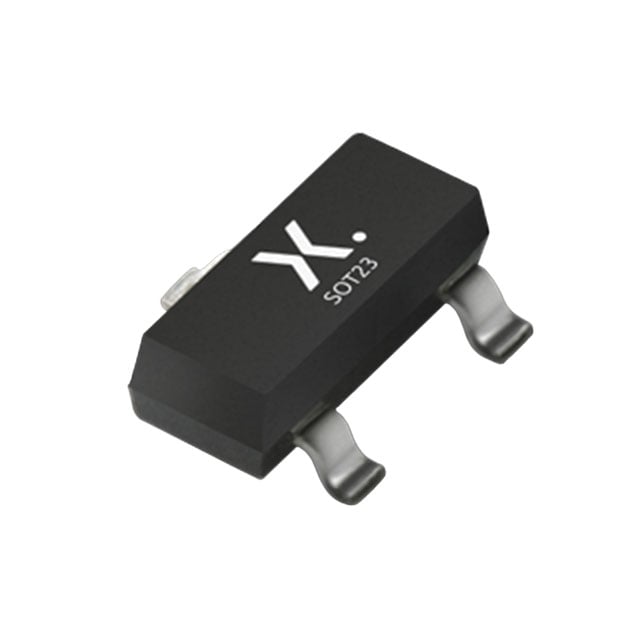
BCV71

Active - TRANS NPN 60V 0.5A SOT23-3
Description:
TRANS NPN 60V 0.5A SOT23-3
BCV71 Specification
Product Attribute
Attribute Value
Packaging
Tape & Reel (TR)
Current - Collector (Ic) (Max)
500 mA
Voltage - Collector Emitter Breakdown (Max)
60 V
Vce Saturation (Max) @ Ib, Ic
250mV @ 500μA, 10mA
Current - Collector Cutoff (Max)
100nA (ICBO)
DC Current Gain (hFE) (Min) @ Ic, Vce
110 @ 2mA, 5V
Operating Temperature
-55 ℃ ~ 150 ℃ (TJ)
Mounting Type
Surface Mount
Package / Case
TO-236-3, SC-59, SOT-23-3
Supplier Device Package
SOT-23-3
BCV71 Description
The onsemi BCV71 is a silicon NPN bipolar junction transistor (BJT) designed for general-purpose amplification and switching applications. It offers high current handling, low saturation voltage, and robust thermal performance, making it suitable for medium-power analog signal amplification, switching circuits, and driver applications. The device provides reliable performance in industrial, consumer, and instrumentation circuits, and its construction ensures stable operation over a wide range of temperatures and operating conditions. Its versatility and ease of use make it a common choice for both discrete circuit designs and integrated module implementations.
## Device Structure and Configuration
The BCV71 is an NPN transistor with a standard three-terminal configuration: collector (C), base (B), and emitter (E). It is constructed using a planar epitaxial technology that provides high current capability, low saturation voltage, and stable gain characteristics. The transistor is available in a TO-92 package, providing compact through-hole mounting with good thermal dissipation for its power class. The device’s construction ensures low parasitic capacitance, which is beneficial for moderate-frequency amplification and switching applications.
## Electrical Characteristics
The BCV71 is specified for continuous collector currents up to 1 A, enabling it to handle moderate load currents in switching applications. Its collector-emitter voltage (VCEO) is rated at 60 V maximum, allowing operation with common low- to medium-voltage circuits. The collector-base voltage (VCBO) is 80 V maximum, and the emitter-base voltage (VEBO) is 5 V maximum, defining safe operating limits to prevent breakdown. The transistor exhibits a maximum power dissipation (PD) of 800 mW when properly heatsinked, which allows moderate continuous operation with sufficient thermal management.
## Current Gain and Performance
The DC current gain (hFE) of the BCV71 ranges from 40 to 320 depending on the collector current and temperature, providing flexibility for amplification or driver applications. At a collector current of 100 mA, the typical current gain is approximately 100 to 250, ensuring reliable amplification of moderate signal levels. The low saturation voltage (VCE(sat)) is typically 0.25 V at IC = 100 mA, IB = 10 mA, which minimizes voltage drop and power loss when the transistor is used as a switch in saturation mode. Base-emitter voltage (VBE) is typically 0.65 V at IC = 10 mA, supporting standard signal drive requirements.
## Frequency Response
The BCV71 provides a transition frequency (fT) of approximately 60 MHz, making it suitable for medium-frequency amplification tasks. This frequency allows applications such as audio preamplifiers, intermediate-frequency stages in communication circuits, and low-speed switching in digital circuits. The device’s low parasitic capacitances, including collector-base capacitance (Ccb) of 8 pF typical, contribute to stable operation with minimal high-frequency loss.
## Thermal and Reliability Features
The TO-92 package offers moderate thermal dissipation, with junction-to-ambient thermal resistance (RθJA) typically 200°C/W. The device is capable of operating over a junction temperature range of –65°C to +150°C, providing reliability in harsh environmental conditions. Proper PCB layout and heatsinking are recommended for continuous operation at high collector currents to maintain thermal stability and prevent degradation of transistor characteristics. The transistor exhibits robust avalanche energy tolerance, providing resilience against transient overvoltage conditions.
## Switching and Amplification Applications
The BCV71 is suitable for general-purpose amplification and switching applications, including:
* Low- to medium-power signal amplification in audio, RF, and instrumentation circuits
* Switch-mode drivers for relays, LEDs, and other moderate-current loads
* Pre-driver stages in power transistor circuits
* Low-voltage digital switching and logic-level interfacing
* Signal conditioning circuits requiring linear amplification with moderate gain
Its combination of high current capability, low saturation voltage, and reliable gain makes it versatile for both linear and switching roles in discrete circuit designs.
## Key Specifications Summary
* Device Type: NPN bipolar junction transistor (BJT)
* Collector-Emitter Voltage (VCEO): 60 V maximum
* Collector-Base Voltage (VCBO): 80 V maximum
* Emitter-Base Voltage (VEBO): 5 V maximum
* Continuous Collector Current (IC): 1 A maximum
* Power Dissipation (PD): 800 mW maximum
* DC Current Gain (hFE): 40–320, depending on IC and temperature
* Saturation Voltage (VCE(sat)): 0.25 V typical at IC = 100 mA
* Base-Emitter Voltage (VBE): 0.65 V typical at IC = 10 mA
* Transition Frequency (fT): 60 MHz typical
* Collector-Base Capacitance (Ccb): 8 pF typical
* Junction Temperature Range: –65°C to +150°C
* Package: TO-92 through-hole
## Conclusion
The onsemi BCV71 is a versatile NPN BJT designed for general-purpose amplification and medium-power switching applications. Its high collector current capability, low saturation voltage, and robust DC current gain make it suitable for a broad range of analog and digital circuits. The device’s frequency response supports moderate-speed signal processing, while the TO-92 package offers a convenient, compact form factor for through-hole PCB integration. With reliable thermal performance and stable characteristics over a wide temperature range, the BCV71 is a dependable choice for industrial, consumer, and instrumentation applications requiring discrete transistor solutions.



 France