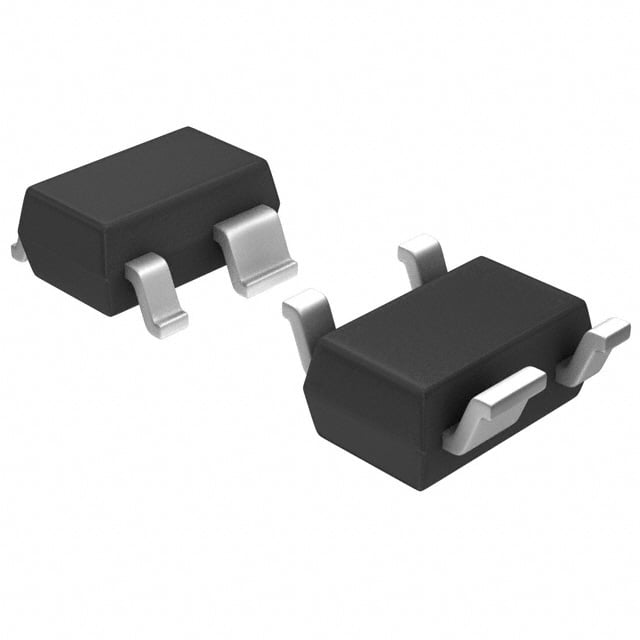
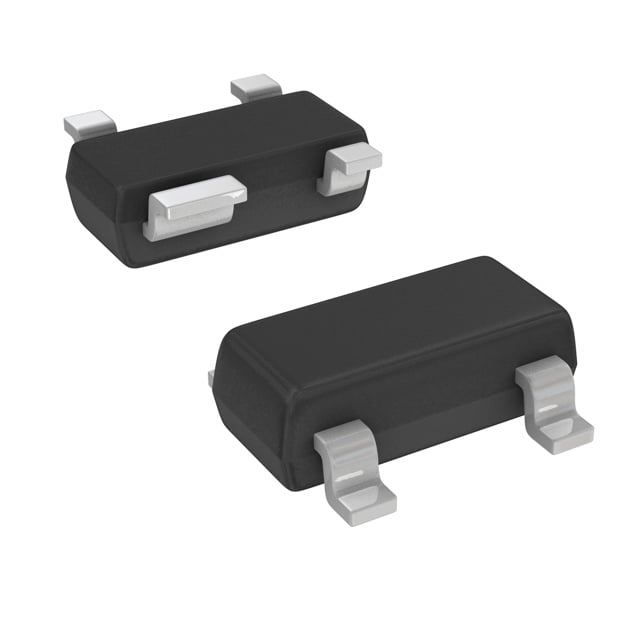
BF256A

Obsolete - JFET N-CH 30V 7MA TO92
Description:
JFET N-CH 30V 7MA TO92
BF256A Specification
Product Attribute
Attribute Value
Transistor Type
N-Channel JFET
Current Rating (Amps)
7mA
Package / Case
TO-226-3, TO-92-3 Long Body
Supplier Device Package
TO-92 (TO-226)
BF256A Description
The BF256A from onsemi is a junction field-effect transistor (JFET) specifically configured as an N-channel depletion-mode device. It is designed to operate primarily in analog signal applications where high input impedance and low noise are critical. The device is fabricated using planar epitaxial technology, which provides reliable performance characteristics and ensures a stable thermal response across typical operating conditions. The BF256A is characterized by its ability to control current flow through the gate-source voltage, exhibiting high resistance in the off state and allowing linear conduction when properly biased. Its structure enables low capacitance between terminals, contributing to high-frequency performance in RF and audio circuits.
## Device Function and Classification
The BF256A is classified as a small-signal N-channel JFET with a depletion-mode operation, meaning it conducts in the absence of a gate voltage and requires a negative gate-source voltage to restrict conduction. It is primarily utilized for voltage-controlled resistor applications, low-noise amplifier stages, and buffer circuits. The depletion-mode configuration allows for linear response characteristics that are beneficial in analog signal processing. This device offers the advantage of very high input impedance, minimizing loading effects on preceding circuit stages. Its encapsulation typically comes in a TO-92 package, supporting ease of integration into through-hole circuits and standard PCB layouts.
## Key Electrical Parameters
The BF256A specifies a set of critical parameters for design and application purposes. The device exhibits a drain-source breakdown voltage (V_DS) of a minimum of 30 volts, ensuring reliable operation within moderate voltage environments. The gate-source cut-off voltage (V_GS(off)) is specified within a range from -0.5 V to -6 V, indicating the gate voltage necessary to completely deplete the channel and cease current conduction. Drain current (I_DSS), which is the current through the device with the gate shorted to the source, is typically specified between 2 mA and 10 mA at a drain-source voltage of 15 V. The device’s input capacitance (C_iss) is approximately 4.5 pF at a test frequency of 1 MHz, which is indicative of its suitability for high-frequency applications. The forward gate current is minimal, typically in the range of nanoamperes, reflecting the high input impedance characteristic of JFETs. The thermal characteristics of the device include a maximum power dissipation (P_D) of 350 mW and a junction temperature range from -65 °C to +150 °C, ensuring stable performance across a broad spectrum of operating conditions.
## Device Characteristics and Operational Parameters
The BF256A exhibits a transconductance (g_m) typical of 2 mS at V_DS = 15 V and I_D = 5 mA, highlighting its effectiveness in amplifying voltage-controlled signals. The device demonstrates a low noise figure, making it appropriate for preamplifier stages in audio and RF systems. The gate-source voltage vs. drain current characteristics display a near-linear response over the central operating region, facilitating analog modulation and signal conditioning applications. The BF256A also maintains a low drain-source on-resistance (R_DS(on)) when operating in the linear region, which contributes to its efficiency in analog switching or voltage-controlled resistor applications. Switching times are not the primary performance metric for this device, but the intrinsic capacitances allow for moderate frequency operation in the MHz range without significant signal degradation.
## Typical Applications
The BF256A is employed extensively in low-noise analog amplification, particularly in audio preamplifiers where minimal thermal and shot noise is required. Its high input impedance makes it ideal for interfacing with high-impedance sources, such as microphones or sensor outputs. In RF circuits, it serves as a voltage-controlled resistor or attenuator in mixer and oscillator stages, leveraging its linear channel resistance modulation. The device is also suitable for buffer stages where minimal signal distortion is essential, as well as in impedance matching networks and analog switching circuits. Additionally, it is used in small-signal amplifier stages where precision control of the drain current via gate voltage is necessary. Its depletion-mode characteristic allows it to remain in conduction under zero gate bias, which can simplify biasing networks in certain analog designs.
## Design Considerations
When integrating the BF256A, careful attention must be paid to gate biasing to ensure that the device operates within the desired conduction range. Due to the wide range of cut-off voltages specified, designers must consider individual device characteristics when designing for precise current control. Thermal management is also a factor in high-power applications, with the maximum dissipation of 350 mW dictating the need for adequate heat sinking or PCB layout considerations. The device’s capacitances, although low, must be accounted for in high-frequency designs to prevent unintended phase shifts or signal attenuation. The TO-92 package allows for simple handling, but parasitic inductances from leads may need to be minimized in RF circuit layouts. The BF256A’s linear response region and low noise properties make it particularly suited for applications requiring both precision and stability under varying temperature conditions.
## Conclusion
The onsemi BF256A JFET represents a reliable and precise solution for low-noise, high-input-impedance analog applications. Its N-channel depletion-mode design provides a versatile platform for voltage-controlled amplification, buffering, and signal modulation. The device's defined parameters, including drain-source breakdown voltage, gate cut-off voltage, drain current, transconductance, and input capacitance, offer engineers clear guidance for design integration. Typical applications span audio preamplifiers, RF mixers, voltage-controlled resistors, and analog switching, emphasizing its role in circuits demanding low noise and high linearity. Careful attention to biasing, thermal management, and capacitance effects ensures the BF256A performs optimally within its specified operational range, making it a dependable component for precision analog circuit design.


 United States