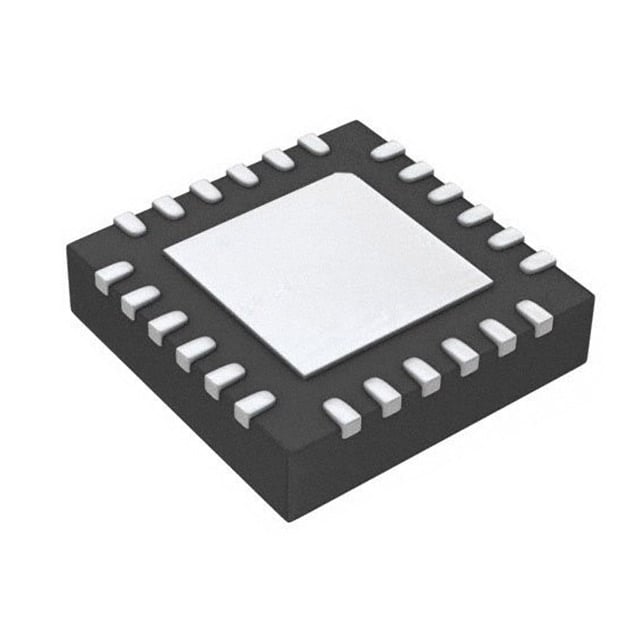
CP2200-GQ

Obsolete - IC ETH CTRLR SNGL-CHIP 48TQFP
Description:
IC ETH CTRLR SNGL-CHIP 48TQFP
CP2200-GQ Specification
Product Attribute
Attribute Value
Standards
10/100/1000 Base-T PHY
Voltage - Supply
3.1V ~ 3.6V
Operating Temperature
-40 ℃ ~ 85 ℃
Supplier Device Package
48-TQFP (7x7)
CP2200-GQ Description
The Silicon Labs CP2200-GQ is a highly integrated USB-to-UART bridge controller designed to simplify the implementation of USB connectivity in embedded systems. This device provides a seamless interface between USB hosts and serial UART devices, enabling efficient data communication with minimal external components. The CP2200-GQ is part of Silicon Labs’ family of USB bridge controllers, known for their robust performance, ease of integration, and wide compatibility.
### General Description
The CP2200-GQ acts as a USB 2.0 full-speed device that converts USB protocol signals into UART serial communication, allowing legacy serial devices to connect directly to modern USB-enabled systems. It supports USB communication speeds up to 12 Mbps and features an integrated USB transceiver, clock oscillator, and power management circuitry, which reduces the overall system cost and complexity.
### Electrical and Performance Specifications
* USB Standard: Complies with USB 2.0 full-speed (12 Mbps) specifications, supporting backward compatibility with USB 1.1 hosts.
* UART Interface: Supports asynchronous serial communication with configurable baud rates from 300 bps up to 1 Mbps, making it flexible for various serial protocols.
* Operating Voltage: The device operates on a 3.0 to 3.6 V supply voltage, with 3.3 V being typical for USB logic levels.
* Power Consumption: Low power consumption, with active current typically around 18 mA during data transfers and reduced power modes to conserve energy during idle periods.
* USB Endpoints: Provides multiple USB endpoints including bulk IN/OUT and interrupt endpoints for efficient data and control transfers.
* Flow Control: Supports hardware flow control with RTS (Request to Send) and CTS (Clear to Send) signals, enhancing reliable serial data transmission.
* Data Buffer: Equipped with internal FIFOs to buffer data on both USB and UART interfaces, minimizing CPU overhead and improving throughput.
* Operating Temperature Range: Standard commercial temperature range from 0°C to 70°C, suitable for most consumer and industrial applications.
### Features and Functional Characteristics
* Integrated USB Transceiver and PHY: Eliminates the need for external USB transceiver chips, simplifying PCB design and reducing component count.
* Configurable UART Parameters: Supports adjustable data bits (5 to 8), parity (none, even, odd), stop bits (1 or 2), and baud rate settings, allowing compatibility with a wide range of serial devices.
* Firmware Upgrade Capability: Supports in-system programmable firmware updates through USB, enabling future enhancements and bug fixes without hardware changes.
* GPIO Pins: Includes general-purpose input/output pins that can be configured for additional control or status signaling functions in embedded designs.
* Low Pin Count Package: Available in a compact QFN package, facilitating integration in space-constrained applications and improving thermal performance.
* Suspend and Resume Support: Implements USB suspend/resume signaling to reduce power consumption during USB bus idle states.
* Self-Powered and Bus-Powered Modes: Supports both bus-powered and self-powered configurations, offering design flexibility for various power scenarios.
* Driver Support: Compatible with standard operating system drivers for USB CDC (Communications Device Class) and also offers Silicon Labs’ own virtual COM port drivers for Windows, macOS, and Linux platforms. This ensures easy deployment without custom driver development.
### Mechanical and Package Details
* Package Type: 32-pin QFN (Quad Flat No-lead) package, with a typical size around 5 mm × 5 mm, suitable for compact embedded system boards.
* Pin Configuration: Includes USB D+/D- data lines, UART TX/RX lines, RTS/CTS flow control signals, power supply pins, and GPIOs arranged for easy PCB routing.
* Thermal Management: The QFN package provides good thermal dissipation through an exposed pad, which can be soldered to the PCB ground plane to enhance heat conduction.
### Applications
* Embedded Systems: Ideal for adding USB connectivity to microcontrollers and legacy serial devices in embedded control systems.
* Industrial Automation: Facilitates communication between USB-equipped PCs and industrial equipment using UART serial protocols.
* Consumer Electronics: Used in devices such as printers, barcode scanners, and point-of-sale terminals that require USB-to-serial bridging.
* Test and Measurement: Enables USB interfacing for serial-based measurement instruments and diagnostic tools.
* Communication Devices: Acts as a bridge in devices requiring USB communication with modems, GPS modules, or other serial peripherals.
### Design Considerations
When designing with the CP2200-GQ, careful attention should be given to USB signal integrity, proper power supply filtering, and layout considerations to minimize noise and interference. The internal FIFOs help reduce microcontroller overhead, but system designers should ensure adequate buffer management to prevent data loss in high-throughput applications. Integration with host software is facilitated by widely supported drivers, but custom applications may need to implement appropriate USB CDC protocols or utilize Silicon Labs’ SDK for advanced functionality. Power management modes should be leveraged to optimize battery life in portable devices.
### Summary
The Silicon Labs CP2200-GQ is a versatile and cost-effective USB-to-UART bridge controller offering high-speed USB 2.0 full-speed communication combined with flexible serial UART interfacing. Its integrated USB transceiver, configurable UART settings, and low power operation make it ideal for embedded systems and legacy device connectivity. With broad driver support and a compact QFN package, the CP2200-GQ simplifies the implementation of USB functionality in a variety of industrial, consumer, and communication applications, ensuring reliable and efficient data transfer between USB hosts and serial peripherals.


 Italy
Italy