P0130AA 1EA3

Active - SCR 100V 800MA TO92-3
Description:
SCR 100V 800MA TO92-3
P0130AA 1EA3 Specification
Product Attribute
Attribute Value
Voltage - Off State
100 V
Voltage - Gate Trigger (Vgt) (Max)
800 mV
Current - Gate Trigger (Igt) (Max)
1 μA
Voltage - On State (Vtm) (Max)
1.95 V
Current - On State (It (AV)) (Max)
500 mA
Current - On State (It (RMS)) (Max)
800 mA
Current - Hold (Ih) (Max)
5 mA
Current - Off State (Max)
1 μA
Current - Non Rep. Surge 50, 60Hz (Itsm)
7A, 8A
Operating Temperature
-40 ℃ ~ 125 ℃
Mounting Type
Through Hole
Package / Case
TO-226-3, TO-92-3 (TO-226AA)
Supplier Device Package
TO-92-3
P0130AA 1EA3 Description
The STMicroelectronics P0130AA 1EA3 is a sensitive gate TRIAC designed for low-power AC switching and phase control applications. It belongs to the “snubberless logic-level TRIAC” class optimized for interfacing directly with low-current control signals such as microcontroller outputs, optotriac drivers, and low-power triggering circuits. The device is intended for AC load control in applications where compact size, low gate trigger current, and reliable bidirectional switching are required. Its silicon structure is designed to provide controlled bidirectional conduction once triggered, enabling phase-angle control and on/off switching of AC loads.
## Device Function and Semiconductor Structure
The P0130AA 1EA3 operates as a bidirectional thyristor (TRIAC), consisting of two inverse-parallel SCR structures integrated on a single silicon chip. This structure allows current conduction in both directions between the main terminals (MT1 and MT2) once the device is triggered via the gate terminal. The device remains in a non-conductive blocking state until a sufficient gate current is applied, at which point regenerative feedback within the PNPN structure initiates conduction.
The TRIAC structure inherently supports latching behavior, meaning that once triggered, conduction continues even after the gate signal is removed, provided that the load current remains above the holding current threshold. Turn-off occurs naturally when the AC current crosses zero and falls below the holding current level. This makes the device particularly suitable for AC line switching without requiring continuous gate drive.
## Electrical Characteristics
The P0130AA 1EA3 is characterized by key parameters including repetitive peak off-state voltage, RMS on-state current, gate trigger current, holding current, and latching current. These parameters define its operational envelope in AC switching environments.
The repetitive peak off-state voltage defines the maximum AC or DC blocking voltage that can be applied between MT1 and MT2 without triggering unwanted conduction. This parameter is critical in mains-operated systems where transient overvoltages may occur.
Gate trigger current is a defining feature of sensitive gate TRIACs, allowing activation with low current drive from control circuits. This enables direct interfacing with optocouplers or low-power digital outputs. Gate trigger voltage and current vary depending on quadrant of operation, as TRIAC triggering behavior is asymmetric across the four triggering quadrants defined by the polarity of MT1, MT2, and gate terminal.
Holding current defines the minimum current required to maintain conduction after triggering. If the load current falls below this level, the device turns off and returns to its blocking state. Latching current defines the minimum current required immediately after triggering to maintain conduction without reverting to the off state.
In the on-state, the device exhibits a defined voltage drop across MT1 and MT2, which contributes to conduction losses and thermal dissipation. This on-state voltage is relatively low compared to the applied line voltage, enabling efficient AC switching operation.
## Operating Conditions and Constraints
The P0130AA 1EA3 is designed for operation in mains voltage AC switching environments and must be used within specified repetitive peak voltage and RMS current limits. Thermal dissipation is a key design consideration, as continuous conduction under high load currents results in junction heating.
Junction temperature must be maintained within defined limits to ensure stable triggering characteristics and prevent parameter drift. Excessive thermal stress can affect gate sensitivity and holding current behavior, leading to unintended triggering or failure to turn off at zero-cross conditions.
The device is sensitive to dv/dt across MT1 and MT2 terminals. High rates of voltage change can induce unwanted triggering due to internal capacitive coupling. Proper circuit design typically includes snubber networks or controlled load impedance to limit dv/dt stress, particularly in inductive load applications.
di/dt during turn-on is also constrained, as excessive current rise can cause localized heating and potential device stress. Proper gate drive design and load impedance management are required to ensure controlled turn-on behavior.
## Input and Output Electrical Behavior
The gate terminal serves as the control input for the TRIAC, requiring a small current pulse to initiate conduction. The triggering mechanism depends on the injection of charge carriers into the internal PNPN structure, which activates regenerative feedback and transitions the device into a low-impedance state.
Once triggered, the device behaves as a bidirectional switch between MT1 and MT2. The current path is determined by the polarity of the applied AC voltage, allowing conduction in both half-cycles of the waveform. The output behavior is therefore symmetrical with respect to AC polarity after triggering.
The device does not exhibit linear amplification behavior; instead, it operates strictly in switching mode between high-impedance (blocking) and low-impedance (conducting) states. Turn-off is controlled by load current falling below holding current, typically occurring at AC zero-crossing points in resistive loads.
## Commutation and Dynamic Performance
Commutation performance is a critical aspect of TRIAC operation, particularly in inductive load applications. When switching inductive loads, current and voltage phase shift can delay current zero-crossing, potentially causing commutation failure. The P0130AA 1EA3 is designed to support stable commutation under defined load conditions, but external circuit design plays a major role in ensuring reliable turn-off.
dv/dt immunity is influenced by device structure and external circuit conditions. High dv/dt transients can induce false triggering, requiring suppression techniques such as RC snubbers or series impedance.
Switching speed is not characterized in the same manner as MOSFETs or BJTs, as TRIAC turn-on is governed by internal regenerative processes, while turn-off is load-current dependent rather than gate-controlled.
## Package Characteristics and Thermal Considerations
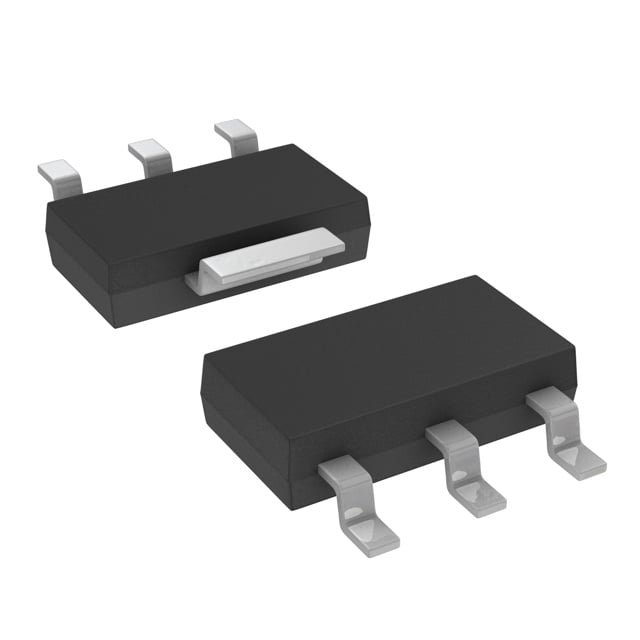
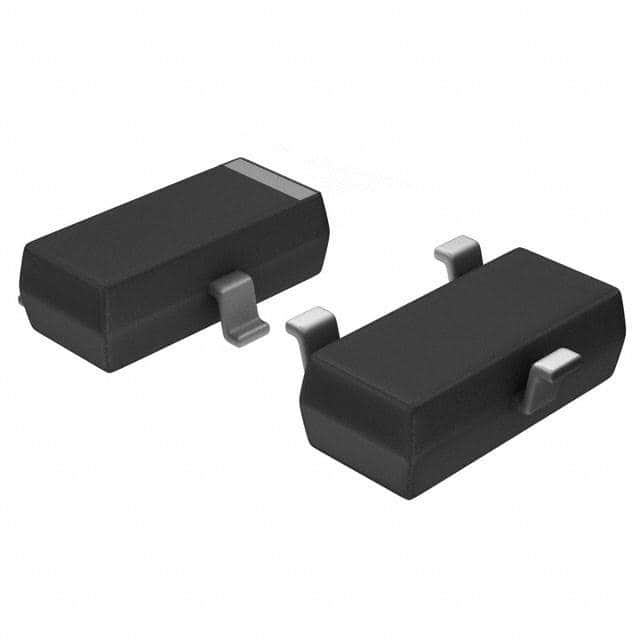
The P0130AA 1EA3 is supplied in a compact surface-mount or leaded package variant depending on ordering code, designed for automated assembly and standard PCB mounting. The package provides a thermal path from junction to ambient through copper PCB areas, requiring careful thermal layout to manage power dissipation under continuous conduction conditions.
Thermal resistance is a key parameter in determining allowable RMS current. Adequate copper area and thermal vias are typically required in high-current applications to maintain junction temperature within safe limits.
Mechanical stability under thermal cycling and solder reflow conditions is ensured through standard semiconductor packaging processes. However, long-term reliability is strongly dependent on thermal management in the final application environment.
## Typical Applications
The P0130AA 1EA3 is used in AC load control applications such as lighting dimmers, fan speed controllers, small appliance switching, and industrial control interfaces. It is particularly suitable for low-power AC switching circuits driven directly from logic-level control signals or optically isolated triac drivers.
It is also used in phase-angle control systems where precise control of conduction angle is required to regulate power delivered to resistive or mildly inductive loads. Additional applications include relay replacement in low- to medium-power AC switching systems where silent operation and solid-state reliability are required.
## Summary
The STMicroelectronics P0130AA 1EA3 is a sensitive gate TRIAC optimized for low-power AC switching and phase control applications. Its bidirectional PNPN structure enables controlled conduction in both AC half-cycles, triggered by low gate current signals suitable for direct interface with logic or optocoupler drivers. Electrical behavior is defined by key parameters including blocking voltage, gate trigger current, holding current, and commutation characteristics. Proper operation requires careful management of dv/dt, di/dt, and thermal conditions to ensure reliable switching performance. The device is well suited for compact AC control systems requiring efficient, low-drive solid-state switching capability.


 Poland