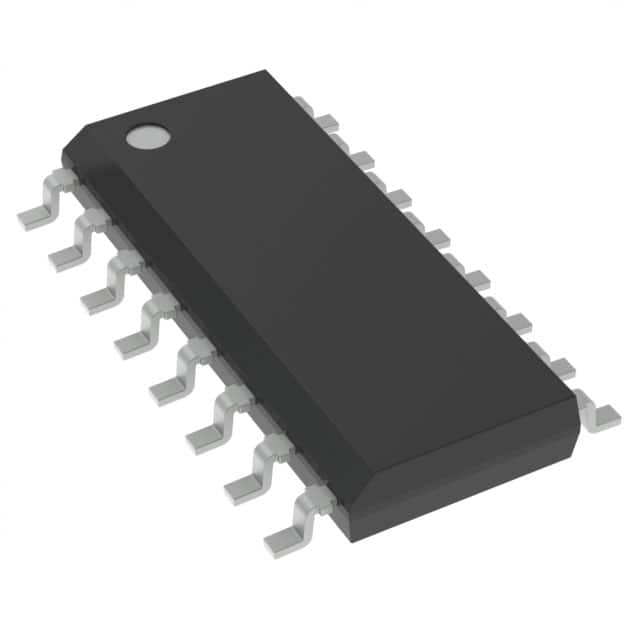
VIPER12ADIP

Obsolete - IC OFFLINE SWITCH 8DIP
Description:
IC OFFLINE SWITCH 8DIP
VIPER12ADIP Specification
Product Attribute
Attribute Value
Output Isolation
Non-Isolated
Voltage - Start Up
14.5 V
Voltage - Supply (Vcc/Vdd)
9V ~ 38V
Frequency - Switching
60kHz
Fault Protection
Current Limiting, Over Temperature, Over Voltage
Operating Temperature
-40 ℃ ~ 150 ℃ (TC)
Package / Case
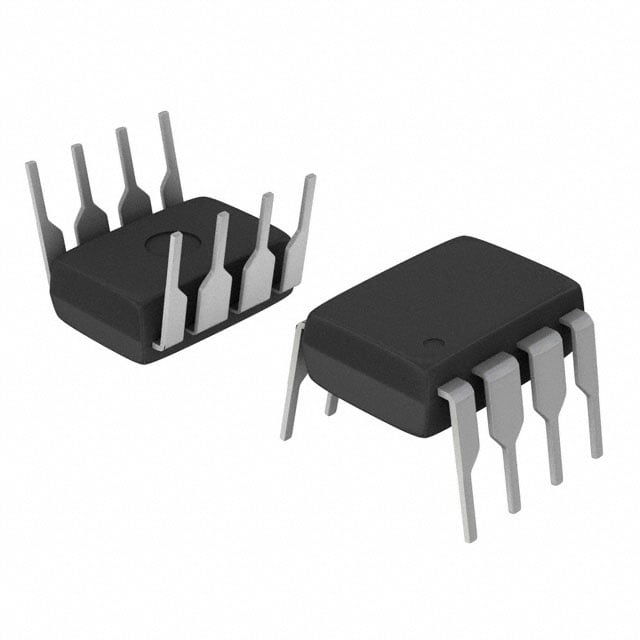
8-DIP (0.300", 7.62mm)
Supplier Device Package
8-DIP
Mounting Type
Through Hole
VIPER12ADIP Description
The STMicroelectronics VIPER12ADIP is a low-power, high-voltage, offline switch-mode power supply (SMPS) primary switcher designed for compact and cost-effective power conversion. Part of the VIPerPlus family, it integrates a PWM controller and a 730 V vertical power MOSFET in a single monolithic IC, making it ideal for low-power applications such as battery chargers, LED drivers, and auxiliary power supplies. Housed in an 8-pin DIP (Dual Inline Package), the VIPER12ADIP is optimized for fixed-frequency, current-mode control, offering high efficiency and robust performance in harsh environments. Below is a comprehensive overview of the VIPER12ADIP, covering its features, specifications, applications, and design considerations.
Overview
The VIPER12ADIP is a high-voltage offline converter designed to operate directly from rectified mains voltage (e.g., 230 VAC). It combines a pulse-width modulation (PWM) controller with a high-voltage power MOSFET, reducing external component count and simplifying design. The device operates in a fixed-frequency mode (60 kHz typical) and employs current-mode control for precise regulation and fast transient response. Its low power consumption, built-in protection features, and wide input voltage range make it suitable for applications requiring up to 13 W of output power in open-frame designs. The VIPER12ADIP is particularly valued for its ruggedness, cost-effectiveness, and ease of use in low-power SMPS designs.
Key Features
The VIPER12ADIP offers a range of features that enhance its performance and reliability:
- Integrated High-Voltage MOSFET: Includes a 730 V power MOSFET, enabling direct connection to high-voltage mains.
- Current-Mode PWM Control: Provides precise regulation and improved transient response.
- Fixed Switching Frequency: Operates at 60 kHz (typical), balancing efficiency and component size.
- Low Startup Current: Typically 50 µA, enabling efficient startup with minimal power loss.
- Built-In Soft-Start: Reduces inrush current and prevents voltage overshoot during startup.
- Overload and Short-Circuit Protection: Features automatic shutdown to protect the system from faults.
- Overvoltage Protection: Safeguards the device against excessive input voltages.
- Low Power Consumption: Optimized for standby and light-load conditions, improving energy efficiency.
- Wide Input Voltage Range: Supports rectified AC inputs from 195 V to 265 V, suitable for universal mains applications.
- Compact DIP-8 Package: Simplifies PCB layout and reduces design footprint.
Detailed Specifications
The following are the key electrical and operational specifications for the VIPER12ADIP:
- Breakdown Voltage (BV_DSS): 730 V (minimum) for the integrated power MOSFET.
- On-Resistance (R_DS(on)): 27 Ω (maximum) at T_J = 25°C.
- Output Power:
- Up to 13 W in open-frame designs (230 VAC ±15%).
- Up to 8 W in wide-range input designs (85–265 VAC).
- Switching Frequency: 60 kHz ±6 kHz (typical).
- Supply Voltage (V_DD): 9 V to 38 V.
- Startup Voltage: 14.5 V (typical).
- Shutdown Voltage: 8 V (typical).
- Startup Current: 50 µA (typical).
- Operating Supply Current: 4.5 mA (typical).
- Feedback Voltage (V_FB): 2.5 V (typical, internal reference).
- Current Limit (I_LIM): 0.48 A (typical).
- Propagation Delay: 100 ns (typical).
- Overvoltage Protection Threshold: 38 V (maximum).
- Operating Temperature Range: -40°C to +150°C (junction temperature).
- Power Dissipation: 1 W (maximum, package-limited).
- Package: 8-pin DIP (PDIP).
- ESD Protection:
- Human Body Model (HBM): ±2 kV.
- Charged Device Model (CDM): Not specified.
- Thermal Resistance (θ_JA): Approximately 100°C/W (DIP-8 package).
Pin Configuration
The VIPER12ADIP is housed in an 8-pin DIP package with the following pinout:
- Pin 1–2 (DRAIN): Drain of the integrated power MOSFET, connected to the transformer primary.
- Pin 3–4 (SOURCE): Source of the power MOSFET, typically connected to ground via a sense resistor.
- Pin 5 (V_DD): Supply voltage for the control circuitry.
- Pin 6 (FB): Feedback input for output voltage regulation.
- Pin 7–8 (NC): Not connected, reserved for internal use or future variants.
Functional Description
The VIPER12ADIP integrates a PWM controller and a high-voltage power MOSFET in a current-mode control architecture. The device operates by modulating the duty cycle of the MOSFET based on the feedback signal (Pin 6) to regulate the output voltage or current. The internal oscillator sets a fixed switching frequency of 60 kHz, and the current-mode control compares the MOSFET current (sensed via the SOURCE pins) with an internal reference to limit peak current cycle-by-cycle.
During startup, the device draws a low current (50 µA) until V_DD reaches the startup threshold (14.5 V), at which point the MOSFET begins switching. The internal soft-start mechanism gradually increases the duty cycle to prevent inrush current. If a fault condition (e.g., overload or short circuit) is detected, the device enters auto-restart mode, reducing power dissipation and protecting the system. The integrated overvoltage protection shuts down the device if V_DD exceeds 38 V, ensuring robustness in high-voltage conditions.
Applications
The VIPER12ADIP is used in a variety of low-power SMPS applications, including:
- Battery Chargers: Provides efficient power conversion for charging portable devices and batteries.
- LED Drivers: Drives LED strings in lighting applications with precise current regulation.
- Auxiliary Power Supplies: Powers control circuits in appliances, industrial equipment, and telecom systems.
- Standby Power Supplies: Supports low-power standby modes in consumer electronics (e.g., TVs, set-top boxes).
- Home Appliances: Used in white goods (e.g., washing machines, refrigerators) for control and auxiliary power.
- Industrial Power Supplies: Provides reliable power for sensors, actuators, and control modules.
Advantages in Power Supply Design
The VIPER12ADIP offers several benefits for power supply designers:
- Integrated Design: Combines PWM controller and MOSFET, reducing component count and cost.
- High Efficiency: Current-mode control and low standby power consumption optimize energy use.
- Robust Protection: Overload, short-circuit, and overvoltage protections enhance system reliability.
- Compact Footprint: The DIP-8 package enables space-efficient designs for small form factors.
- Wide Input Range: Supports universal mains input, making it suitable for global applications.
- Simplified Design: Built-in soft-start and fixed frequency reduce design complexity.
Typical Application Circuit
In a typical flyback converter application, the VIPER12ADIP is used to convert rectified mains voltage (195–265 VAC) to a regulated DC output. The DRAIN pins (1–2) connect to the primary winding of a flyback transformer, while the SOURCE pins (3–4) connect to ground through a current-sense resistor. The V_DD pin (Pin 5) is powered by an auxiliary winding via a diode and capacitor, providing the control circuitry supply. The FB pin (Pin 6) receives feedback from the secondary side via an optocoupler or auxiliary winding to regulate the output voltage. A snubber circuit across the transformer primary suppresses voltage spikes, and a capacitor on V_DD ensures stable operation.
Design Considerations
When designing with the VIPER12ADIP, engineers should consider the following:
- Transformer Design: Select a transformer with appropriate turns ratio and inductance to match the desired output voltage and power.
- Feedback Loop: Design a stable feedback loop using an optocoupler or auxiliary winding to ensure precise regulation.
- Snubber Circuit: Include a snubber (e.g., RC or RCD) across the transformer primary to limit voltage spikes.
- V_DD Decoupling: Place a capacitor (e.g., 10 µF) close to the V_DD pin to filter noise and stabilize the supply.
- Thermal Management: Ensure adequate heat sinking or PCB copper area to dissipate heat, especially at high ambient temperatures.
- PCB Layout: Minimize trace lengths for DRAIN and SOURCE pins to reduce parasitic inductance and EMI.
Comparison with Similar Devices
The VIPER12ADIP is part of the VIPerPlus family, which includes variants like the VIPER12AS (SO-8 package) and VIPER22A (higher power, up to 20 W). Compared to the VIPER12AS, the VIPER12ADIP offers the same functionality but in a through-hole DIP-8 package, making it suitable for applications requiring robust mechanical mounting. The VIPER22A, with a lower R_DS(on) (17 Ω vs. 27 Ω), supports higher output power but is less optimized for ultra-low-power applications. Alternatives from other manufacturers, such as the NCP1014 from ON Semiconductor, offer similar integrated switcher functionality but differ in MOSFET voltage rating and control features.
Availability and Packaging
The VIPER12ADIP is available in an 8-pin DIP package (PDIP). While the device has been succeeded by the VIPER12ADIP-E (enhanced version), it remains available through distributors for legacy designs. The “E” suffix indicates RoHS compliance (Ecopack1) and minor improvements in manufacturing. STMicroelectronics provides evaluation boards, reference designs, and design tools (e.g., eDesignSuite) to assist with prototyping and optimization.
Conclusion
The STMicroelectronics VIPER12ADIP is a robust, cost-effective solution for low-power offline SMPS applications, combining a 730 V power MOSFET and PWM controller in a compact DIP-8 package. Its fixed-frequency operation, current-mode control, and integrated protection features make it ideal for battery chargers, LED drivers, and auxiliary power supplies. With low startup current, high efficiency, and support for universal mains input, the VIPER12ADIP simplifies design while ensuring reliability in demanding environments. Although succeeded by newer variants, it remains a proven choice for legacy and cost-sensitive designs, offering a balance of performance and simplicity.



 Brazil