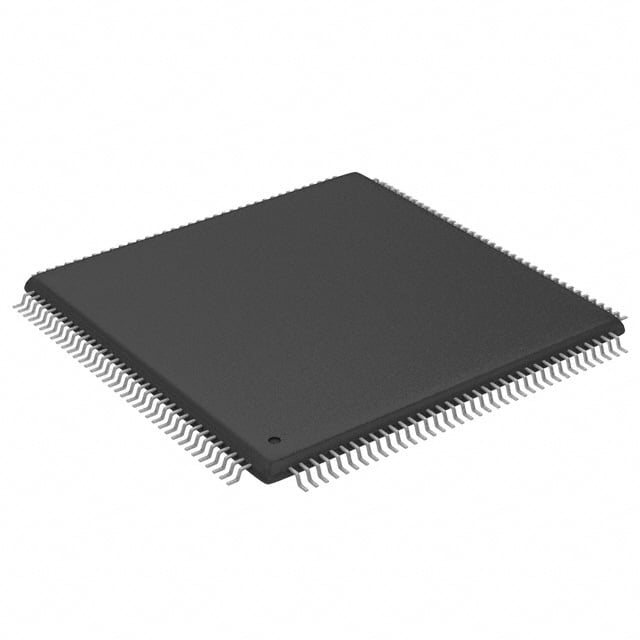
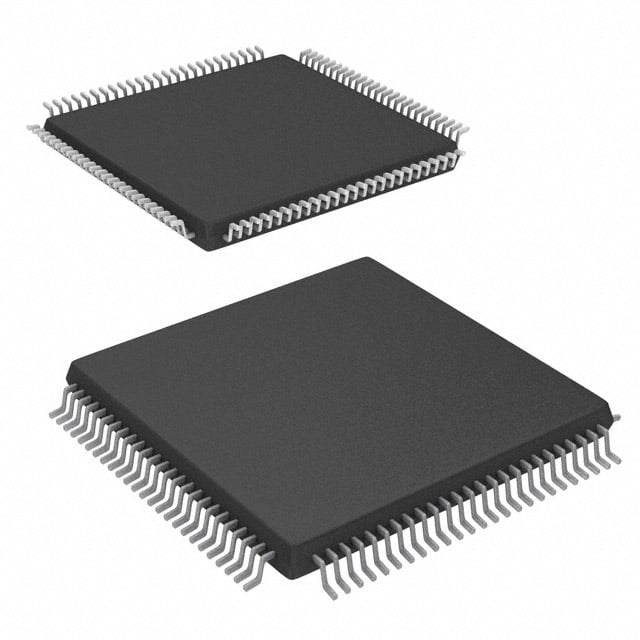
XC2C64A-7VQ100I

Active - IC CPLD 64MC 6.7NS 100VQFP
Description:
IC CPLD 64MC 6.7NS 100VQFP
XC2C64A-7VQ100I Specification
Product Attribute
Attribute Value
Programmable
Not Verified
Programmable Type
In System Programmable
Delay Time tpd(1) Max
6.7 ns
Voltage Supply - Internal
1.7V ~ 1.9V
Number of Logic Elements/Blocks
4
Operating Temperature
-40 ℃ ~ 85 ℃ (TA)
Mounting Type
Surface Mount
Supplier Device Package
100-VQFP (14x14)
XC2C64A-7VQ100I Description
## Overview
The Xilinx XC2C64A-7VQ100I is a member of the CoolRunner-II CPLD family, designed for low-power, high-performance logic implementation. It targets applications that require deterministic timing, fast I/O response, and efficient power usage in industrial, automotive, and communication systems. The device integrates advanced CPLD architecture with high-speed macrocells to implement complex combinational and sequential logic.
## Architecture
* Logic Cells: 64 macrocells, providing flexible combinatorial and registered logic functions
* Logic Blocks: Each macrocell supports sum-of-products logic with optional flip-flop integration for sequential logic
* I/O Blocks: 100 user I/O pins configured for high-speed, bidirectional signaling
* Programmable Interconnect: Full crossbar switch fabric enabling any-to-any macrocell and I/O routing
* Architecture Optimization: Non-volatile, antifuse-based architecture ensuring zero standby power after programming
## Performance and Timing
* Speed Grade: -7, optimized for timing-sensitive applications
* Maximum Input Frequency: Approximately 200 MHz for combinational paths depending on design complexity
* Propagation Delay: Typical macrocell-to-macrocell delay in the low nanosecond range, supporting high-speed logic operations
* Timing Predictability: Deterministic performance ideal for synchronous designs and timing-critical control paths
## Memory and Logic Resources
* Flip-Flops: Integrated D-type flip-flops in each macrocell for state storage and sequential logic
* Sum-of-Products Logic: Each macrocell can implement multiple logic product terms
* Combinatorial Functions: Efficient implementation of AND-OR logic, multiplexers, and conditional structures
* Sequential Logic: Supports registers, counters, and shift registers within macrocells
## I/O and Connectivity
* I/O Standards: Supports LVCMOS, LVTTL, and other voltage-compatible signaling standards
* Input/Output Pins: 100 pins on the VQ100 package for high-density designs
* I/O Capabilities: Configurable for synchronous, asynchronous, and tristate operation
* Bus Interface: Capable of implementing wide buses and interfacing directly with external memory or peripheral devices
## Power and Environmental Characteristics
* Operating Voltage: 3.3 V nominal, tolerant to variations depending on I/O standard
* Low Power Consumption: Typically < 1 mW per macrocell at standby, optimized for battery-powered and industrial systems
* Operating Temperature: Industrial grade (-40°C to 85°C) ensuring reliability in harsh environments
* Packaging: 100-pin VQFP providing a compact footprint with excellent thermal dissipation
## Programming and Configuration
* Configuration Method: One-time programmable, antifuse-based architecture ensuring non-volatility
* Programming Technology: Electrical programming with JTAG support for test and debugging
* Security: Non-volatile antifuse technology prevents unauthorized reprogramming or tampering
## Applications
* Industrial Control Systems: Timing-critical control logic for machinery, robotics, and automation
* Communication Interfaces: Protocol bridging, signal conditioning, and bus management
* Automotive Electronics: Engine management, sensor interface logic, and safety systems
* Consumer Electronics: Power sequencing, LED control, and peripheral interface logic
* Legacy System Replacement: Efficient upgrade of TTL-logic designs with compact, low-power CPLD solutions
The XC2C64A-7VQ100I combines low power consumption, fast deterministic performance, and high-density I/O capabilities, making it suitable for complex combinatorial and sequential logic applications in industrial, automotive, and communication domains. Its antifuse-based, non-volatile architecture ensures long-term reliability and stability in timing-critical environments.



 Netherlands