2N7002

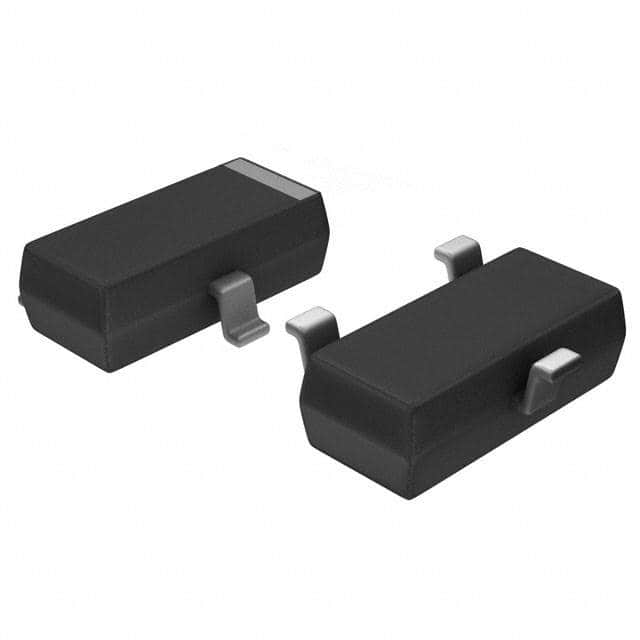
Active - MOSFET N-CH 60V 115MA SOT-23
Description:
MOSFET N-CH 60V 115MA SOT-23
2N7002 Specification
Product Attribute
Attribute Value
Packaging
Tape & Reel (TR)
Technology
MOSFET (Metal Oxide)
Drain to Source Voltage (Vdss)
60 V
Current - Continuous Drain (Id) @ 25℃
115mA (Ta)
Drive Voltage (Max Rds On, Min Rds On)
5V, 10V
Rds On (Max) @ Id, Vgs
7.5Ohm @ 500mA, 10V
Vgs(th) (Max) @ Id
2.5V @ 250μA
Gate Charge (Qg) (Max) @ Vgs
-
Input Capacitance (Ciss) (Max) @ Vds
50 pF @ 25 V
Power Dissipation (Max)
200mW (Ta)
Operating Temperature
-55 ℃ ~ 150 ℃ (TJ)
Mounting Type
Surface Mount
Supplier Device Package
SOT-23-3
Package / Case
TO-236-3, SC-59, SOT-23-3
2N7002 Description
The STMicroelectronics 2N7002 is a widely used N-channel MOSFET (Metal-Oxide-Semiconductor Field-Effect Transistor), specifically designed for low-power, high-efficiency applications where space is limited. The device is part of the 2N7000 series of MOSFETs and is commonly employed in switching, amplification, and signal processing circuits. Due to its small size and efficient performance characteristics, it is ideal for use in low-voltage applications, signal switching, and digital circuits.
### Key Specifications
#### General Characteristics
* Device Type: The 2N7002 is a single N-channel enhancement-mode MOSFET, meaning it requires a positive voltage at the gate relative to the source to turn on. It is a logic-level MOSFET, allowing it to be driven directly by low-voltage logic circuits like microcontrollers, logic gates, or other digital components.
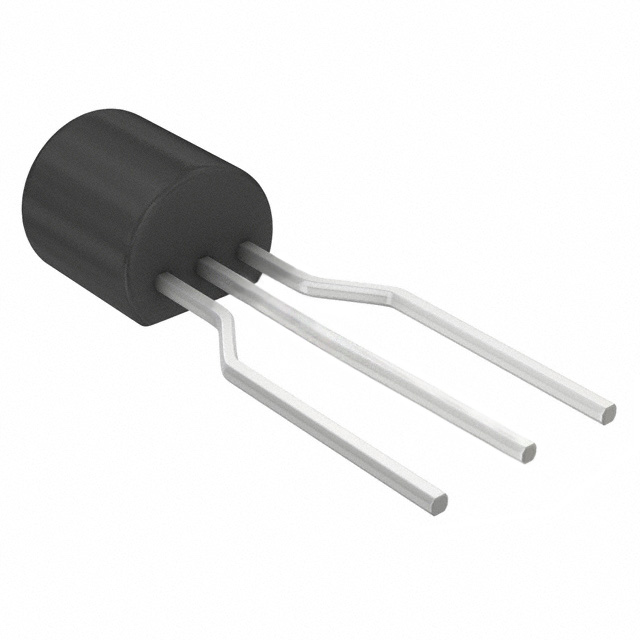
* Package Type: The device comes in a TO-92 package, a three-lead package commonly used for small-signal transistors, making it ideal for compact PCB designs.
* Pin Configuration: The 2N7002 has three pins:
* Pin 1 (Drain): The pin where the current flows out of the MOSFET. It is connected to the load or the high-voltage side of the circuit.
* Pin 2 (Gate): The control input, where a positive voltage is applied to switch the device on (allowing current to flow from the drain to the source).
* Pin 3 (Source): The pin where current enters the MOSFET. It is connected to the low-voltage side of the circuit, often ground in a simple switching application.
#### Electrical Characteristics
* Drain-Source Voltage (Vds): The 2N7002 is rated for a maximum drain-source voltage (Vds) of 60V. This means that it can safely block voltages up to 60V between the drain and source terminals without breaking down.
* Gate-Source Voltage (Vgs): The maximum gate-source voltage (Vgs) is ±20V. Exceeding this voltage can damage the MOSFET, so proper voltage control on the gate is essential.
* Continuous Drain Current (Id): The device can handle a continuous drain current (Id) of up to 200 mA, making it suitable for low-power switching applications. The maximum current depends on the ambient temperature and the thermal management of the system.
* Pulsed Drain Current (Id(pulse)): The pulsed drain current is rated at 400 mA, meaning the MOSFET can handle brief spikes in current, such as during switching transients, without damage.
* Total Power Dissipation (Pd): The maximum power dissipation is 500 mW at 25°C, meaning the device can safely dissipate up to 500 milliwatts of heat during operation without overheating.
#### On-Resistance (Rds(on))
* The on-resistance (Rds(on)) of the 2N7002 is typically 0.5 Ω at a gate-source voltage of 10V. The on-resistance is a key factor in determining the efficiency of the MOSFET during switching. A low Rds(on) value indicates minimal power loss during conduction and high efficiency, particularly in low-voltage circuits.
* The Rds(on) increases at lower gate voltages, which is common for most MOSFETs. The 2N7002 is designed for logic-level driving, meaning it works efficiently at 5V or 3.3V logic levels for turning on the MOSFET.
#### Gate Threshold Voltage (Vgs(th))
* The gate threshold voltage (Vgs(th)) is typically between 1V and 3V, which means that the MOSFET starts to turn on (allowing current to flow from drain to source) when the gate-source voltage exceeds this range. The device is designed to switch on with low-voltage logic levels, making it highly suitable for direct interfacing with microcontrollers or logic circuits.
* Vgs(th) is the voltage at which the MOSFET just starts to conduct, and it is an important characteristic for determining how well the device will perform when controlled by logic signals.
#### Capacitances
* Input Capacitance (Ciss): The typical input capacitance, which is the capacitance between the gate and source (Cgs), is typically around 30 pF. This parameter is important for high-speed switching applications since higher capacitance can slow down the switching speed.
* Output Capacitance (Cos): The typical output capacitance, which is the capacitance between the drain and source (Cds), is about 10 pF, which is relatively low for a device of this size.
* Reverse Transfer Capacitance (Crss): The reverse transfer capacitance (Cgd), which represents the capacitance between the gate and drain, is typically about 6 pF. These capacitances affect the speed of switching and are important for high-frequency applications.
#### Thermal Characteristics
* Operating Junction Temperature (Tj): The MOSFET can operate at junction temperatures ranging from -55°C to +150°C. This wide temperature range makes it suitable for use in automotive and industrial environments where the temperature can fluctuate.
* Thermal Resistance (Rth): The junction-to-ambient thermal resistance is typically around 250°C/W. Thermal management is crucial in MOSFET-based designs, as excessive power dissipation can lead to overheating, potentially causing failure. The device should be used in systems with adequate heat dissipation, such as heat sinks or proper PCB layout.
### Application Considerations
#### Switching Characteristics
* Turn-on and Turn-off Times: The 2N7002 offers fast switching times, with typical rise time (tr) and fall time (tf) in the range of 10-20 ns. These fast switching characteristics make it ideal for digital circuits, especially where rapid transitions between states are needed.
* Gate Drive Requirements: Since the 2N7002 is a logic-level MOSFET, it requires minimal voltage (around 5V or 3.3V) to switch on fully. The gate-source voltage should be carefully controlled to avoid exceeding the Vgs(max) of 20V.
#### Protection Features
* Overcurrent Protection: While the 2N7002 itself does not include internal overcurrent protection, external current-limiting resistors or fuses can be used to prevent excessive current flow, particularly in high-power applications.
* ESD Protection: The device includes some inherent electrostatic discharge (ESD) protection, but additional clamp diodes or TVS diodes may be required in high-sensitivity applications.
### Key Features and Benefits
1. Logic-Level Gate Drive: The 2N7002 is designed for operation with low-voltage logic signals (e.g., 5V or 3.3V), making it easy to interface with microcontrollers and other digital ICs without requiring additional gate drivers.
2. Low On-Resistance: With a typical Rds(on) of 0.5Ω, the 2N7002 offers low conduction losses, ensuring efficient performance in switching applications.
3. High Voltage Rating: The 60V drain-source voltage rating makes the 2N7002 suitable for a wide range of applications that require moderate voltage handling.
4. Fast Switching Speed: The fast switching times of the 2N7002 make it ideal for high-speed digital circuits and signal processing tasks.
5. Compact Package: The device comes in the TO-92 package, which is compact and easily integrated into space-constrained designs.
6. Low Gate Drive Requirements: The low gate threshold voltage makes it easy to drive the 2N7002 directly with standard logic outputs, reducing complexity in the design.
### Applications
The STMicroelectronics 2N7002 is suitable for a variety of applications in both low-voltage and signal-switching circuits. Some of the most common uses include:
* Switching Applications: Ideal for controlling low-power loads in digital circuits, such as turning on and off LEDs, motors, and relays.
* Logic-Level Switching: Widely used in microcontroller interfacing, where logic-level signals are used to control larger power devices.
* Signal Amplification: Can be used as a low-power amplifier for analog signals in low-power electronics.
* Voltage-Level Shifting: Used in voltage level shifting applications where logic signals at different voltage levels need to be interfaced.
* Power Electronics: Used in low-power DC-DC converters, where it switches relatively low voltage signals efficiently.
### Conclusion
The STMicroelectronics 2N7002 is a highly versatile and efficient N-channel MOSFET ideal for low-voltage switching applications. With a 60V drain-source voltage rating, low on-resistance, logic-level gate drive, and fast switching characteristics, the device excels in a variety of electronic circuits requiring reliable, high-efficiency switching. Its small package and simple control requirements make it an excellent choice for embedded systems, microcontroller interfacing, and signal processing applications.


 Italy
Italy





,TO-226_straightlead.jpg)